
What is Market Equilibrium?
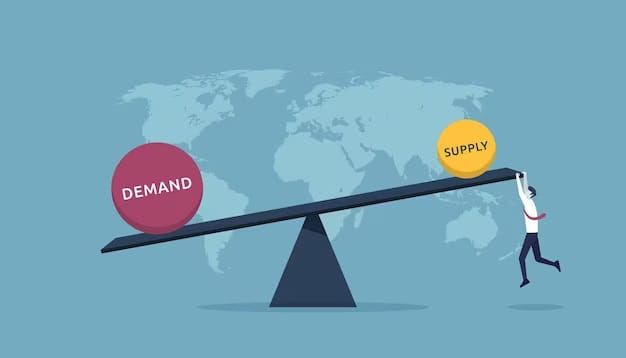
In the dynamic world of economics, the concept of market equilibrium plays a pivotal role in understanding the intricate interplay between supply and demand. The delicate balance is the cornerstone of well-functioning market, where the forces of production and consumption align harmoniously. Whether you're an aspiring entrepreneur, an investor, or simply someone curious about the mechanics of the market, grasping the principles of market equilibrium is essential.
This comprehensive guide will take you on a journey through the intricate workings of market equilibrium, exploring its fundamental concepts, graphical representations, and real-world applications. By the end, you'll have a deeper understanding of how to navigate the ever-changing landscape of supply and demand, empowering you to make informed decisions and stay ahead of the curve.
Understanding supply and demand
Before delving into the intricacies of market equilibrium, it's crucial to grasp the foundational concept of supply and demand. Supply represents the willingness and ability of producers to offer goods or services at various price points, while demand reflects the desire and purchasing power of consumers for those goods or services.
These two forces are inextricably linked, constantly adjusting and influencing each other in a dynamic dance. Factors such as production costs, consumer preferences, and market competition can shift the supply and demand curves, creating ripple effects throughout the entire market ecosystem.
What is market equilibrium?
Market equilibrium is the state where the quantity supplied by producers precisely matches the quantity demanded by consumers at a specific price point. It is the perfect balance, where there is no shortage of surplus of goods or services, and both buyers and sellers are satisfied with the prevailing market conditions.
At equilibrium, the market is said to be "cleared," meaning that all willing buyers and sellers have successfully completed their transactions, and there is no excess supply or unmet demand. This harmonious state is often referred to as the "market-clearing" price and quantity.
The concept of equilibrium price
The equilibrium price is the specific price point at which the quantity supplied by producers equals the quantity demanded by consumers. It is the market's way of finding the sweet spot where supply and demand intersect, creating a state of balance.
At this price, producers are willing to offer the exact amount of goods or services that consumers are willing to purchase. Any deviation from the equilibrium price would result in either a surplus (oversupply) or a shortage (undersupply), disrupting the delicate market.
The concept of equilibrium quantity
Equilibrium quantity is the amount of goods or services that will be bought and sold at the equilibrium price. It represents the point where the supply and demand curves intersect, signaling the perfect match between what producers are willing to offer and what consumers are willing to purchase.
At this quantity, the market is operating at its most efficient level, with no excess supply or unmet demand. Any deviation from the equilibrium quantity would lead to imbalances, either in the form of unsold inventory or unfulfilled consumer needs.
Factors that disrupt market equilibrium
While market equilibrium is a desirable state, it is not a static or permanent condition. Various factors can disrupt the delicate balance, causing shifts in supply and demand, and consequently, changes in the equilibrium price and quantity.
Some common factors that can disrupt market equilibrium include:
- Changes in consumer preferences or tastes
- Technological advancements or innovations
- Shifts in production costs (e.g., raw materials, labor, energy)
- Government policies and regulations
- Changes in the number of buyers or sellers in the market
- External factors such as natural disasters or economic crises
These disruptions can lead to either a surplus (excess supply) or a shortage (excess demand), necessitating adjustment to restore the market equilibrium.
Adjustments to restore market equilibrium
When market equilibrium is disrupted, the market has an inherent mechanism to self-correct and restore balances. This process involves adjustments in prices and quantities, driven by the forces of supply and demand.
- Supply (Excess Supply): If there is a surplus in the market, producers will lower prices to incentivize consumers to purchase more, thereby reducing the excess supply. As price decrease, demand will increase, and the market will move towards a new equilibrium point.
- Shortage (Excess Demand): In the case of a shortage, producers will raise prices to ration the limited supply among consumers. As prices increase, demand will decrease, and the market will move towards a new equilibrium point where supply and demand are balanced.
These adjustments are a natural response to market forces, as producers and consumers seek to maximize their respective benefits and reach a maturity agreeable equilibrium point.
Real-world examples of market equilibrium
Market equilibrium is not just a theoretical concept; it manifests in various real-world scenarios across different industries and markets. Here are a few examples to illustrate the practical application of market equilibrium:
- Housing Market: The housing market is a prime examples of market equilibrium in action. Where there is an oversupply of houses (surplus), prices tend to decrease, attracting more buyers and restoring equilibrium. Conversely, when demand for housing outpaces supply (shortage), prices rise, discouraging some buyers and allowing the market to find a new balance.
- Labor Market: The labor market operates on the principles of supply and demand for workers. When there is a surplus of workers (unemployment), wages tend to decrease, incentivizing employers to hire more workers and restoring equilibrium. Conversely, when there is a shortage of workers, wages rise, attracting more workers to the market and balancing supply and demand.
- Commodity Markets: Markets for commodities such as oil, gold, and agricultural products are heavily influenced by supply and demand dynamics. Factors like production levels, geopolitical events, and consumer demand can disrupt the equilibrium, leading to price fluctuations and adjustments in supply and demand to restore balance.
- Retail Markets: In the retail sector, companies constantly monitor consumer demand and adjust their inventory levels and pricing strategies to achieve market equilibrium. Overstocking can lead to discounts and clearance sales, while high demand can result in price increases or limited supply to balance the market.
These examples demonstrate the ubiquity of market equilibrium in various sectors and highlight the importance of understanding and adapting to the ever-changing dynamics of supply and demand.
Conclusion: The importance of achieving market equilibrium
Achieving market equilibrium is crucial for the efficient allocation of resources, the satisfaction of consumer needs, and the overall health of an economy. When supply and demand are in balance, producers can optimize their production levels, consumers can access the goods and services they desire, and resources are utilized effectively.
However, it's important to recognize that market equilibrium is not a static state. It is a dynamic process that requires constant monitoring and adjustments to account for changing market conditions, consumer preferences, and external factors.
By understanding the principles of market equilibrium, businesses, policymakers, and individuals can make informed decisions that promote economic stability, foster innovation, and ultimately contribute to the overall well-being of society.


